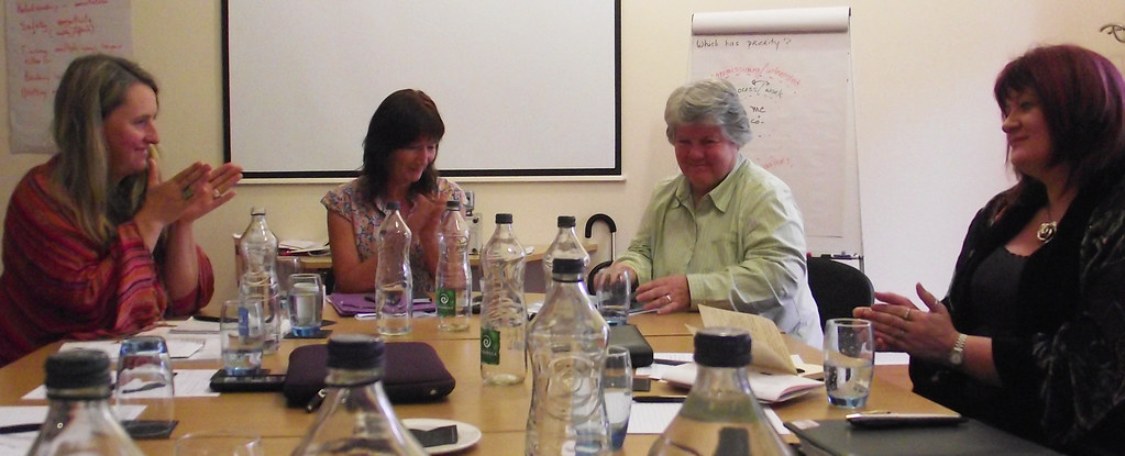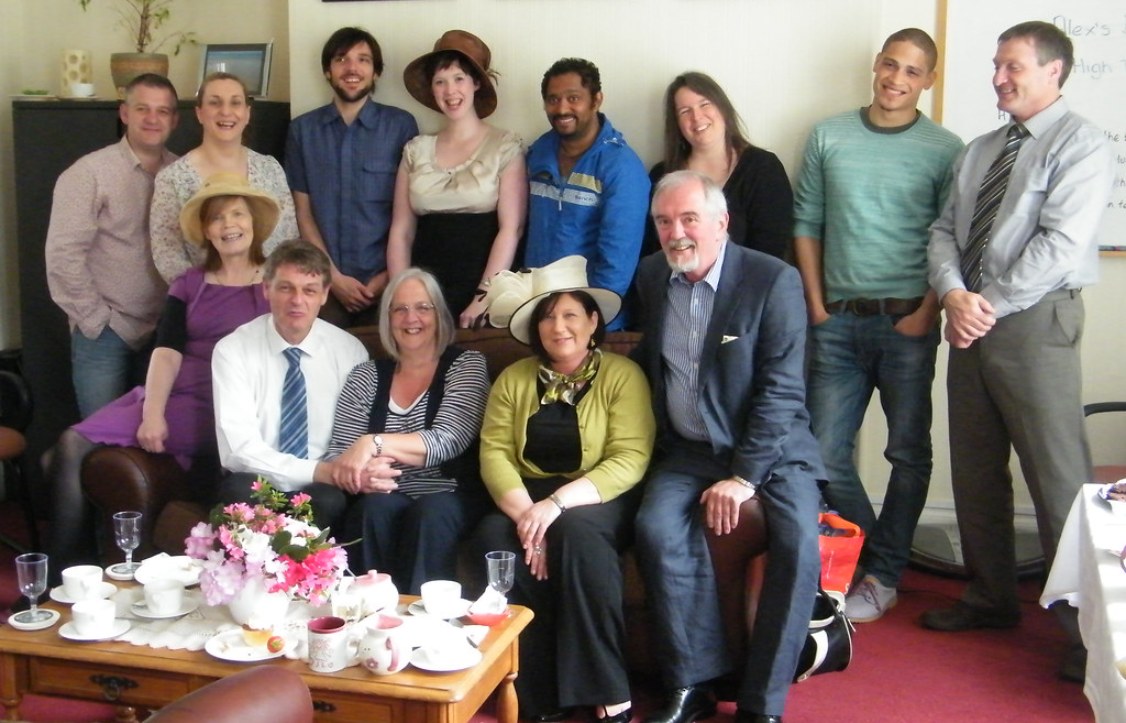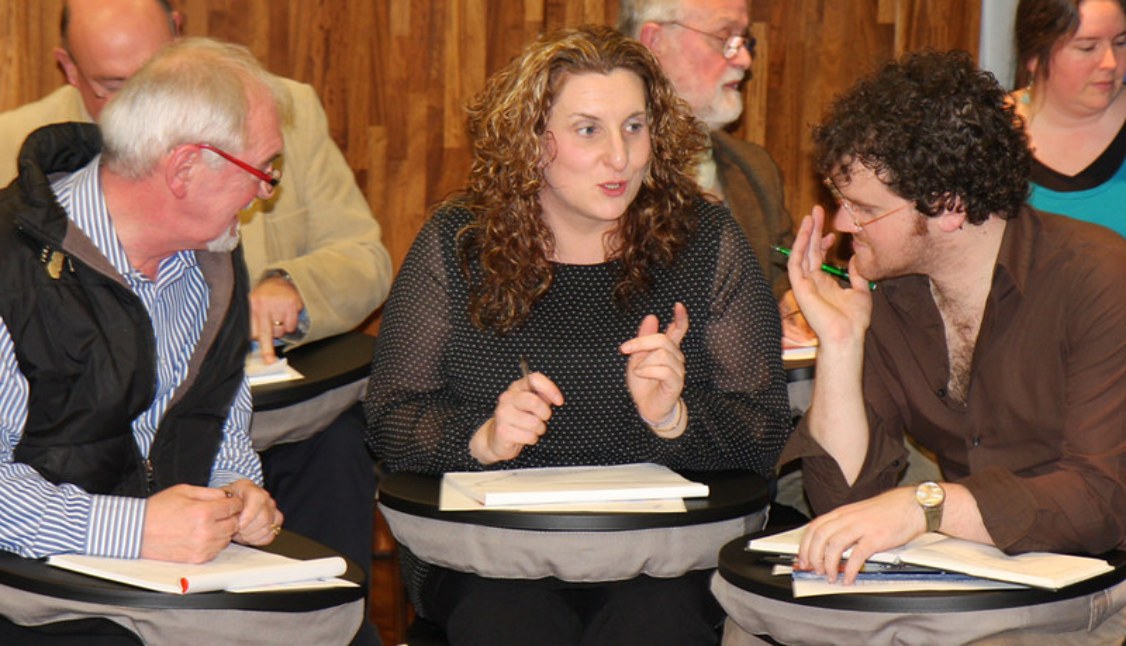
Where TIDES began
The story of TIDES is closely connected to the story of peacebuilding in Northern Ireland. It grew from the belief that meaningful change happens when people have the opportunity to meet, share, listen, understand difference and find new ways of responding to conflict.
Its roots lie in the work and ethos of the Corrymeela Community, where generations of people explored what it meant to live together in the midst of conflict and difference. It was from that experience, as staff members there, that Mary Montague and Colin Craig created TIDES and began developing a distinctive approach of their own to supporting individuals, communities and organisations to build their capacity for positive, peaceful change.
From the beginning, relationships were at the heart of the work. We learned that peace is not simply the absence of conflict. It is about how we respond to difference, how we manage disagreement, how we recognise where we differ and put guidelines in place to prevent escalation. It is about how we repair relationships when they are damaged, and how we create the conditions in which people can participate and flourish.
TIDES was established around kitchen tables, in the stories heard when people felt safe enough to share them, in the vulnerabilities of those who had been harmed and those who did harm, and on the experience and wisdom of people already working in peacebuilding, community development, mediation and reconciliation. One desire was there from those early days: to make all of this accessible to everyone, not only to those able to study at university but to those with lived experience.
Developing the TIDES approach
Over the years TIDES developed its own way of working, blended from what we had experienced, observed, learned about, tried, tested and succeeded at — as well as what we had failed at. The starting point was often our past: what makes us who we are, from childhood through to adulthood, including the families and communities we were raised in and the schools, churches and clubs we were part of. Exploring that past helps us understand our values and identities, and understand what triggers us and can lead to conflict. It gives people time to reflect, to understand what is happening, to find ways through difficult situations and to support relationships that have become strained or broken.
From that foundation the work increasingly became about something bigger. How do we build people’s capacity? How do we build capacity with those who resource the communities most affected by violence? How can we prevent the escalation of violence, when it costs everyone so much?
Rather than working in isolation to produce the answer, we work alongside people to understand their context, recognise their strengths, and develop approaches that are meaningful and sustainable for them. That has taken us into communities, schools, housing, statutory organisations, voluntary and community organisations and workplaces, across Northern Ireland, the island of Ireland, the UK and internationally.
The work has continued to evolve, but the underlying belief has stayed the same: people have the capacity to create positive change when they have the right support, relationships and space to do so. We built accredited courses to bring these themes to a wide range of individuals, groups and organisations, working closely with OCN to make sure there are progression pathways for anyone who wants to build on each stage of their learning.
From conflict management to positive peaceful change
As TIDES grew, so did the range of the work. We developed expertise in conflict management and mediation alongside community relations, good relations, diversity and equality, restorative practice, trauma-informed practice, leadership, group work and community capacity building. We became increasingly interested not only in what happens when conflict occurs, but in what can be done before conflict escalates: building relationships strong enough that people can explore cultural identity and expression, tackle the big issues, and be challenged by opinions different from their own in a setting where they are able to listen.
That led us into work with communities experiencing tension around identity, culture and contested issues, and with schools and organisations seeking to develop more restorative cultures. Our restorative practice work has become an important part of the journey. We have worked with school communities to support a move from simply responding to incidents towards creating cultures where relationships, belonging, accountability and early intervention are valued.
We have also developed accredited learning that enables people to take restorative approaches back into their own communities and organisations, connecting our learning and experience with that of others working on the same themes around the world.
Learning alongside communities
One of the things that has shaped TIDES most profoundly has been the willingness of communities to let us walk alongside them. The work has taken us into a huge range of places, and that has been a privilege. We have supported communities to explore contentious cultural issues, identity, prejudice, racism, interface tensions and relationships across difference.
- Sometimes this has involved mediation.
- Sometimes training.
- Sometimes a community conversation.
- Sometimes simply creating a safe space for people to talk.
We have learned as much from the people and communities we have worked with as we have brought to them. That is why our approach has always been about working with, rather than doing to.
People make TIDES
Like any organisation, TIDES has changed over the years — through the people we have worked with, the communities we have worked in, and the skills and abilities staff have brought with them. Each has contributed something to the story. The work has also been shaped by the many organisations and institutions who trusted us to work alongside them, across the community and voluntary sector, education, housing, policing, local government and other statutory bodies.
Partnership has never simply meant delivering a project together. It has meant learning from one another, challenging one another, sitting together in the middle of difficult situations and asking: what might be possible here?
Some of the moments that shaped us
There are too many projects, people and moments to capture in one history, but some shaped us more than we could have imagined: new recruit training for the PSNI, bonfire work, Springboard, the BRIC project with the Northern Ireland Housing Executive, the Labour Mobility programme with Royal Mail, and work with key institutions including the GAA, the Loyal Orange Lodge, Ulster Scots, Irish Language organisations and uniformed marching bands. There were regional peace programmes with Bryson, Extern, South West Regional College and Donegal Youth Service, the Changemakers programme with Shankill Women’s Centre, and work alongside the Education Authority rolling out restorative practice to whole school communities, similar to what we delivered in Leeds City Council.
Alongside the bigger programmes there are the less visible moments: the conversation that changed someone’s mind, the community that found a way through a difficult issue, the young person who found their voice and was able to speak up after weeks of silence, the staff team that learned to have a different kind of conversation. Those are the moments that remind us why the work matters.
Twenty-five years of TIDES
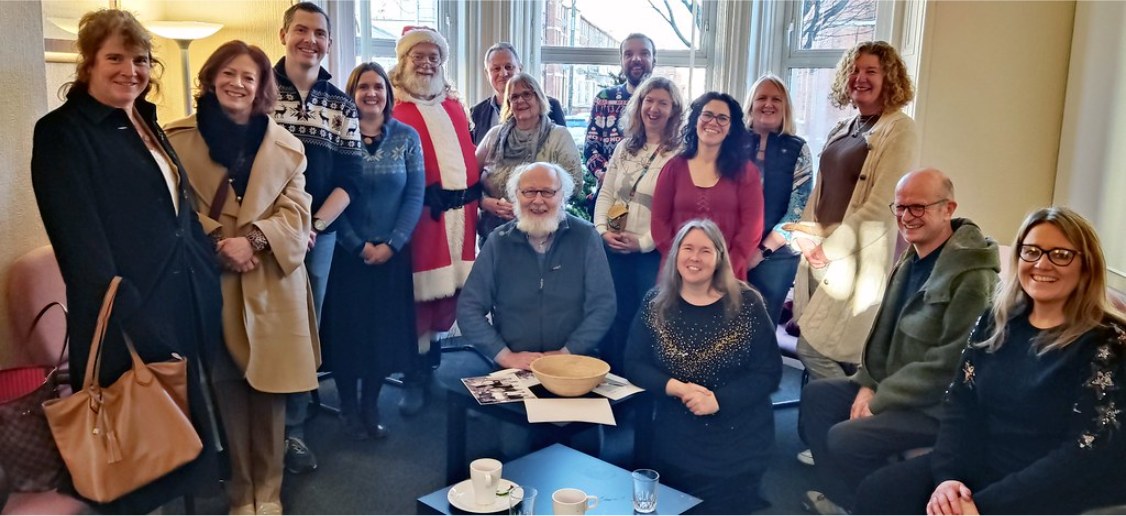
In 2026 TIDES celebrated twenty-five years of its own journey, while recognising the much longer tradition of peacebuilding from which it emerged. Our anniversary theme — celebrating the past, embracing the present, looking to the future — reflected something important about the organisation.
We wanted to honour where we had come from without being defined by the past. We wanted to recognise the work happening now. And we wanted to stay curious about what peacebuilding needs to become next. The anniversary was also an opportunity to celebrate those who helped shape the organisation, including our late co-founder Mary Montague, whose contribution continues to influence the work, and whose book we were able to launch.
Bringing the journey together
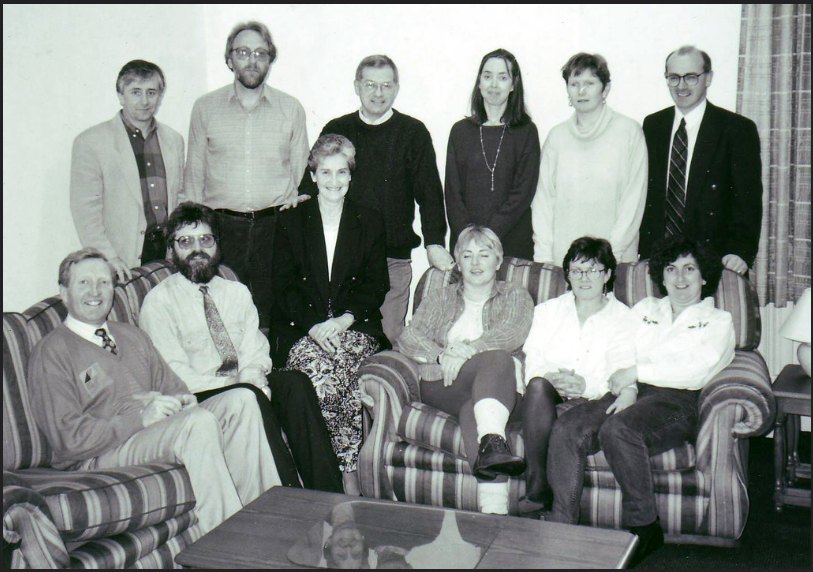
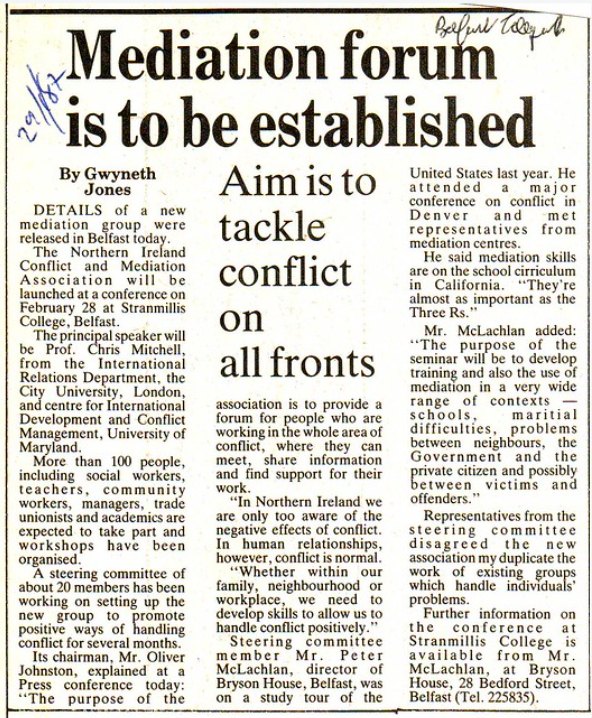
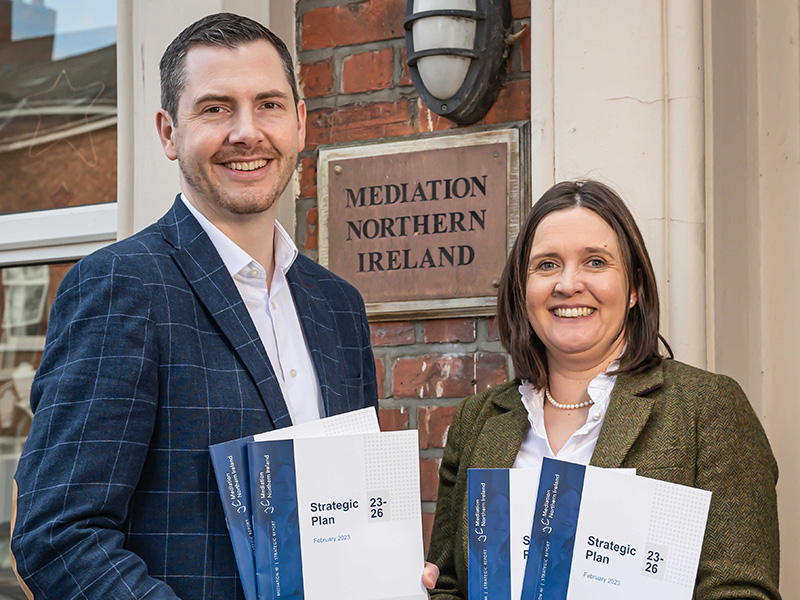
In 2026 another significant chapter began. After almost two years of discussion, sharing values, staff meeting one another, board members meeting, planning and preparation, TIDES and Mediation Northern Ireland came together as one organisation. Both had developed out of the experience of the conflict and the search for more constructive ways of responding to it.
Together we bring more than sixty years of combined experience — different histories, networks, expertise and perspectives, and an opportunity to learn from each other while creating something new. Northern Ireland has changed a great deal since the Good Friday Agreement, and we need to plan the next twenty-five years in an ever-changing world.
Where we are now
Today, TIDES Mediation NI continues to work with individuals, communities and organisations to build capacity for positive peaceful change. The work keeps evolving. The challenges facing communities are different in some ways from those of twenty-five or thirty-five years ago, but many of the fundamental questions remain the same.
- How do we live well with difference?
- How do we respond when relationships break down?
- How do we address harm?
- How do we create spaces where people can be heard?
- How do we build communities where everyone has a sense of belonging?
- And perhaps most importantly — how do we equip people to become agents of positive change in their own communities?
We don’t have all the answers. But we have learned that change is possible. And we continue to believe that people, relationships and communities are at the heart of it.