
Category: Mediation

  • Family Mediation in Northern Ireland

    Family Mediation in Northern Ireland

    Embracing a New Chapter with Family Mediation Northern Ireland

    Recently, we hosted Family Mediation NI on our podcast, The Resolution Room. They spoke about how life’s journey can bring unexpected turns, and for families navigating separation, finding a supportive path forward is key. In Northern Ireland, family mediation offers a positive, collaborative approach that puts your family’s needs first. It’s a confidential and voluntary process designed to help you make well-informed decisions for a brighter future. Many families across Northern Ireland are discovering the profound benefits of this empowering approach.

    Instead of traditional routes that can sometimes feel adversarial, family mediation provides a calm and structured space for open discussion. These discussions are carefully guided by an impartial expert, ensuring fairness and understanding. This strong focus on clear and respectful communication helps parents create lasting arrangements that genuinely benefit everyone involved, with a particular emphasis on the well-being and stability of children.

    Why Choose Family Mediation Northern Ireland?

    The fundamental goal of family mediation Northern Ireland is not just about reaching a simple agreement; it’s about empowering families to actively shape their own solutions. This process helps parents move forward constructively, enabling them to create a clear and workable co-parenting plan. This plan specifically prioritises their children’s happiness, security, and long-term stability. Importantly, this process fosters valuable new ways of communicating, skills that are essential for effective co-parenting long after a relationship ends.

    Historically, the societal focus in Northern Ireland was often on efforts to keep families together. However, society has evolved, and recognising the realities of modern family structures, where separation is sometimes a part of life’s journey, is important. Family mediation Northern Ireland embraces this reality, thoughtfully focusing on what’s genuinely best for children when parents separate. It ensures they maintain healthy, ongoing relationships with both parents. This proactive, early intervention approach plays a crucial role in preventing the significant emotional and financial strain often associated with lengthy court battles.

    The Positive Impact of Early Intervention

    Choosing mediation early in the separation process can significantly reduce stress and lead to improved outcomes for all involved. It allows parents to take direct responsibility for their children’s future, giving them the power to craft solutions that work best for their unique circumstances. This collaborative approach helps families avoid the complexities, uncertainties, and delays often experienced within the court system, offering a more efficient, compassionate, and family-centred route to resolution.

    Family mediation Northern Ireland is a vital and evolving service, offering a truly constructive way to navigate significant life changes. It actively supports families in moving forward positively, consistently ensuring that children’s well-being remains at the absolute heart of every decision made.

    Ready to deepen your understanding of conflict resolution and learn empowering communication techniques? Sign up for Mediation NI’s variety of mediation training courses today! We offer flexible options, from introductory to advanced levels, available both ‘off-the-shelf’ and tailored to suit your group’s specific needs. Whether you’re an individual looking to expand your skills or part of an organisation aiming for team development, we have the perfect course for you. Explore our offerings and elevate your skills for a more harmonious future!


  • Mediation Training for Lawyers: A Practical Skill for Better Outcomes

    Mediation Training for Lawyers: A Practical Skill for Better Outcomes

    Ask any lawyer what they want for their clients, and the answer is usually the same: a fair outcome that avoids dragging people through months or years of disputes. That’s exactly where mediation training for lawyers comes in. It’s a fresh way of looking at disputes, one that works for clients, communities, and the legal profession itself.

    Why Lawyers Choose Mediation Training

    For many lawyers, the daily work of handling disputes is full of pressure. Clients arrive carrying stress, frustration, and uncertainty. Mediation offers a way to change that experience. It brings people into the room, focuses on what matters, and allows them to find ways forward that the courtroom often can’t provide.

    Mediation training for lawyers helps you build the skills to guide clients through that process. You don’t have to give up your legal practice to train in mediation. Instead, it adds another tool to your professional toolkit.

    Practical Skills That Make a Difference

    Through mediation training for lawyers, you learn how to handle tough conversations, keep people focused on solutions, and make sure the legal details don’t get lost along the way. It’s a practical skill, built around listening, guiding, and supporting people to find their own answers.

    You can start using mediation skills right away in your legal work. It might be a difficult employment dispute or a breakdown in a business relationship. Mediation works by helping people shift from blame to resolution; early, practically, and with real care for the people involved.

    Helping Clients Find Better Outcomes

    Clients don’t want endless paperwork and costly hearings. They want their disputes dealt with properly, fairly, and in a way that doesn’t leave everyone exhausted by the end of it. Mediation training for lawyers gives you the confidence to help them get exactly that.

    It’s not about changing the law or giving up your legal edge. It’s about working with people before things go too far, and showing them a way out that feels right for everyone involved.

    Flexible Mediation Training to Suit Your Needs

    We know that training has to fit into busy lives. That’s why we’ve developed a variety of mediation courses to suit the needs of our clients. From introductory to advanced level courses, we offer both ready-made and tailored options.

    You can join an open-access course alongside others, or if you have a group in mind, we can deliver a course specifically for you. We can tailor our training to meet your group’s priorities, with flexible timescales and independent accreditation available. If you need extra support with your learning, we’re here for that too.

    Ready to Get Started?

    Add mediation to your professional skillset and support your clients in finding real solutions. Sign up for one of our mediation training courses today. Whether you’re just starting or looking to build on your skills, we’ll work with you to make sure the training fits your needs and your time.

    Explore our full range of mediation training courses – open-access or tailored for your group – and take the next step in professional development.

  • Better Outcomes Through Mediation: Why It Matters for Relationships and Communities

    Better Outcomes Through Mediation: Why It Matters for Relationships and Communities

    There are moments in life when relationships break down and everything feels beyond repair. Family members stop talking. Friends fall out. Workplaces fracture. Sometimes, it even leads to people feeling like there’s no way back at all.

    In those moments, we need more than arguments and court dates. We need better outcomes. That’s where mediation comes in.

    Why Mediation Matters

    When personal relationships break down, the emotional weight is heavy. Anger, sadness, frustration; all of it can build up over time.

    But mediation creates a safe space. It’s not about who’s right or wrong. It’s about helping people listen to each other, often for the first time in years.

    Mediation allows people to speak honestly, with someone neutral guiding the process. It isn’t about forcing agreement. It’s about offering a way forward.

    Better Outcomes for Families and Communities

    Mediation works across all sorts of relationships; personal, family, and community. It’s helped broken families start talking again. It’s helped parents and teenagers find understanding. It’s helped neighbours turn arguments into solutions.

    In tough cases, it’s even been the difference between despair and hope. For those dealing with family breakdown or isolation, mediation can help break the cycle and rebuild confidence. It can be the first step towards change.

    Supporting Healing, Not Just Settling Disputes

    Many people think of mediation as something formal, like a meeting with lots of paperwork. The truth is, mediation is a human process. It’s often the first time both sides truly hear each other.

    In post-conflict places like Northern Ireland, we’ve seen how mediation gently helps people move from bitterness to conversation. It’s not about winning. It’s about healing.

    Making the Right Choices for the Right Outcomes

    Not every dispute needs to end in court. The justice system is important, but it’s not always the right fit for every problem. Many people don’t realise how much stress, cost, and time court cases can bring.

    Mediation gives people a chance to solve problems differently. It’s about making choices that work for real life, choices that lead to better outcomes.

    Start Your Journey with Us

    At Mediation NI, we know that better outcomes start with better understanding. That’s why we offer a range of courses to help people learn about mediation, whether you’re just starting out or looking to deepen your skills.

    We provide both ready-made courses and fully tailored training for your group. Individuals can join our open-access courses, or we can design a session that works for your team. Independent accreditation is available for most of our courses, and additional learning support is offered whenever needed.

    Ready to start creating better outcomes? Sign up for one of our courses today or choose from off-the-shelf modules or bespoke training shaped around your group’s needs and discover how mediation can help you, your team, or your organisation build a stronger, healthier future.


  • Overcoming Challenges with the Mediation Process: Building Trust and Positive Peace

    Overcoming Challenges with the Mediation Process: Building Trust and Positive Peace

    Mediation is a transformative process that plays a crucial role in helping individuals and communities navigate conflict and build lasting trust. It’s a process rooted in empathy, respect, and a commitment to positive change. Through mediation, parties involved in disputes are not only able to resolve their differences but also to cultivate a deeper understanding of each other’s perspectives. This collaborative approach provides a space where solutions are reached through dialogue, making it an invaluable tool for workplace disputes, community tensions, or personal conflicts.

    Trusting the Mediation Process

    One of the most significant components of successful mediation is trust, both in the process itself and in the mediator. For practitioners, the mediation process is not something that is merely theoretical; it is a well-tested and structured approach honed over decades of experience. Mediators work with parties who may have deeply entrenched positions, but through a trusted and impartial framework, we guide them toward constructive dialogue and resolution.

    At the outset, it can be difficult to fully embrace the mediation process, especially for those who are unfamiliar with it. However, as mediators with years of experience in diverse and often high-stakes environments, we understand that the process may seem daunting. Yet, the results speak for themselves. The skills and practices we rely on have been tried and tested in countless situations, showing that even the most challenging disputes can be resolved.

    The process of mediation encourages participants to embrace a new way of thinking; one that focuses on problem-solving rather than the escalation of conflict. With knowledge, skills, and patience, mediators are able to break down barriers between conflicting parties, allowing them to rebuild their relationship and move forward with trust. This process provides a framework that can handle even the most complex of disagreements, offering hope where it may seem in short supply.

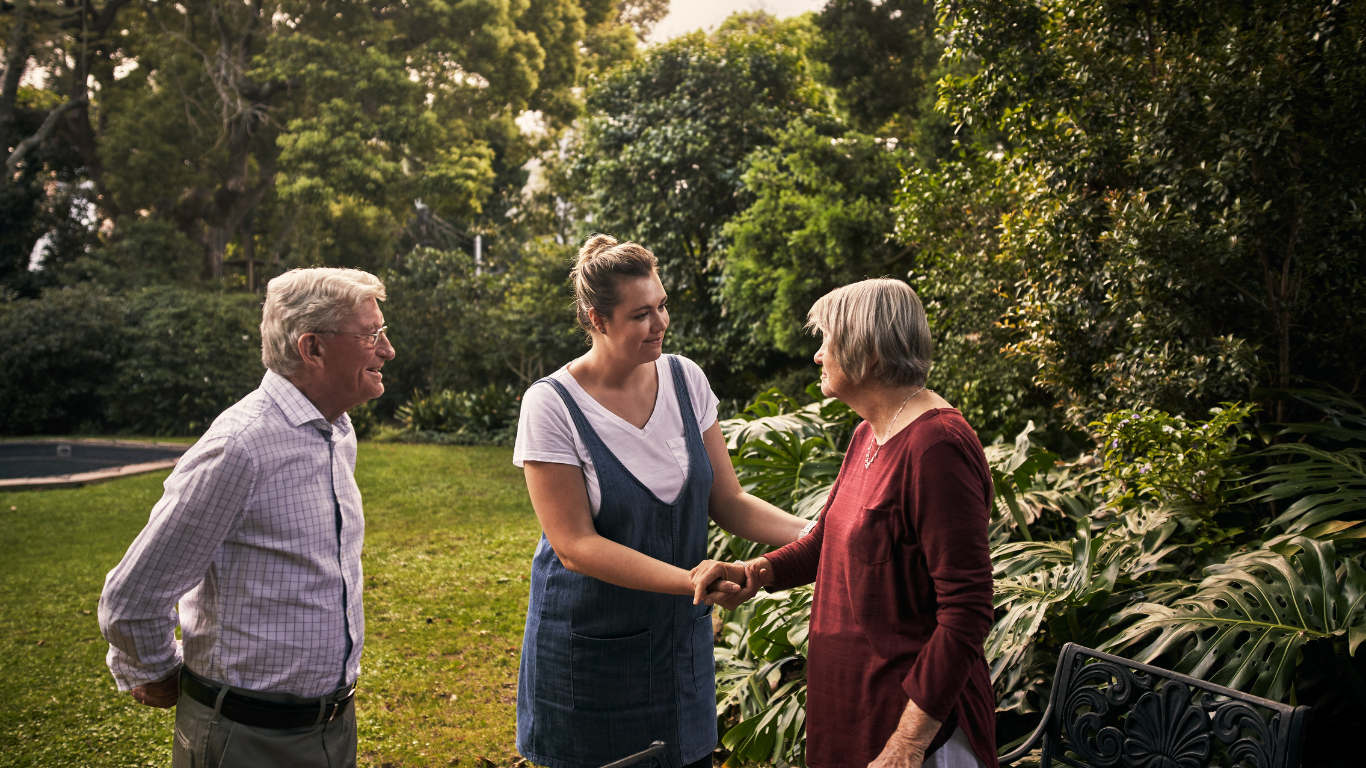
    Three people shaking hands in a garden, symbolising trust and connection in conflict resolution and mediation.

    Overcoming Challenges with Courage and Creativity

    Mediation is not without its challenges. Often, parties come to the table with deep emotional wounds, entrenched views, and a history of mistrust. However, mediators are trained to face these challenges with courage, recognising that conflict resolution requires both patience and creativity. Each situation is unique, and it’s through innovative thinking that mediators help parties break free from the cycles of blame and negativity that often accompany unresolved conflict.

    Creativity is a key aspect of the mediation process. Mediators are not merely facilitators of conversation but also problem-solvers, drawing on their experience and imagination to craft solutions that serve all parties involved. In many ways, mediation is like cleaning out a cluttered kitchen drawer. In that, the process can be messy at first, but once the clutter is cleared away, a more organised and functional space emerges. Each issue, each concern, is addressed thoughtfully and strategically, ensuring that nothing is overlooked and that every party is given an opportunity to be heard.

    In the face of tension, mediators maintain a calm and composed presence, allowing space for parties to express their frustrations while keeping the conversation focused on finding solutions. By remaining steadfast in their commitment to the mediation process, mediators help to transform a chaotic, emotionally charged situation into one of cooperation and mutual understanding. This ability to turn conflict into collaboration is one of the hallmarks of successful mediation.

    Mediation as a Tool for Positive Peace

    Nonviolence is at the heart of mediation, but it’s important to understand that nonviolence isn’t just about avoiding conflict—it’s about creating positive peace. This is a core principle that sets mediation apart from other forms of conflict resolution. Nonviolence in mediation means fostering an environment in which all parties feel heard, respected, and valued. It encourages dialogue, understanding, and collaboration, rather than division or hostility.

    In practice, nonviolence manifests in the way mediators facilitate conversations. It’s about setting the tone for the discussion, ensuring that everyone has an opportunity to speak without fear of being dismissed or silenced. By creating a safe space for dialogue, mediators help parties move from a place of hurt and frustration to one of shared understanding and cooperation. The presence of understanding, respect, and mutual support are paramount to this positive peace.

    Mediation also works to prevent future conflict by helping individuals develop the skills needed to manage disputes constructively. Through the mediation process, parties learn how to communicate effectively, listen actively, and negotiate in a way that prioritises mutual benefit over personal gain. This not only resolves the current dispute but also equips individuals with the tools to handle future challenges in a way that promotes harmony and collaboration.

    The sculpture "Hands Across the Divide" in Derry. A compelling image that encapsulates the journey of mediation in Northern Ireland; from its roots in intense conflict to its application in everyday settings. This bronze and silver statue, created by local artist Maurice Harron and erected in 1992, symbolises reconciliation between both sides of the political divide during The Troubles. It poignantly represents the bridging of communities and the enduring power of relationship-building in mediation.

    Realising the Impact: Mediation’s Role in Transforming Communities

    Mediation has proven to be an invaluable tool in resolving conflicts in a variety of settings. In post-conflict societies like Northern Ireland, mediation has played a vital role in addressing issues left unresolved by the Good Friday Agreement. While the violent conflict of the Troubles may have ended, tensions remained, particularly around issues such as parades, flags, and access to public services. These unresolved conflicts continued to divide communities and disrupt the peace, but mediation offered a way forward.

    In Northern Ireland, mediation practitioners worked with communities to address these issues, providing a platform for dialogue and resolution. They helped bridge the gap between divided groups, allowing them to address their differences without resorting to violence or further escalation. Mediation also played a key role in facilitating police training and monitoring interface areas where tensions were high, ensuring that all parties were able to engage in productive, peaceful discussions.

    The success of mediation in post-conflict Northern Ireland highlights its potential for resolving disputes in communities around the world. Whether addressing historical grievances, social divisions, or workplace conflicts, mediation offers a structured, impartial process that helps people find common ground and move forward in a positive direction.

    Building Trust Through Mediation

    Mediation is a pathway to building trust and fostering lasting peace. The process provides individuals with the opportunity to engage in open, respectful dialogue, creating solutions that benefit all parties. By embracing the principles of integrity, nonviolence, and creativity, mediation offers a framework that allows communities, organisations, and individuals to move beyond conflict and work together towards a common goal.

    Through the mediation process, we can overcome challenges, and build trust. It’s a process that requires commitment, patience, and courage, but the rewards are immense. By focusing on the positive, the solution-focused nature of mediation, we can transform conflict into opportunity and create a society that handles conflict better.